
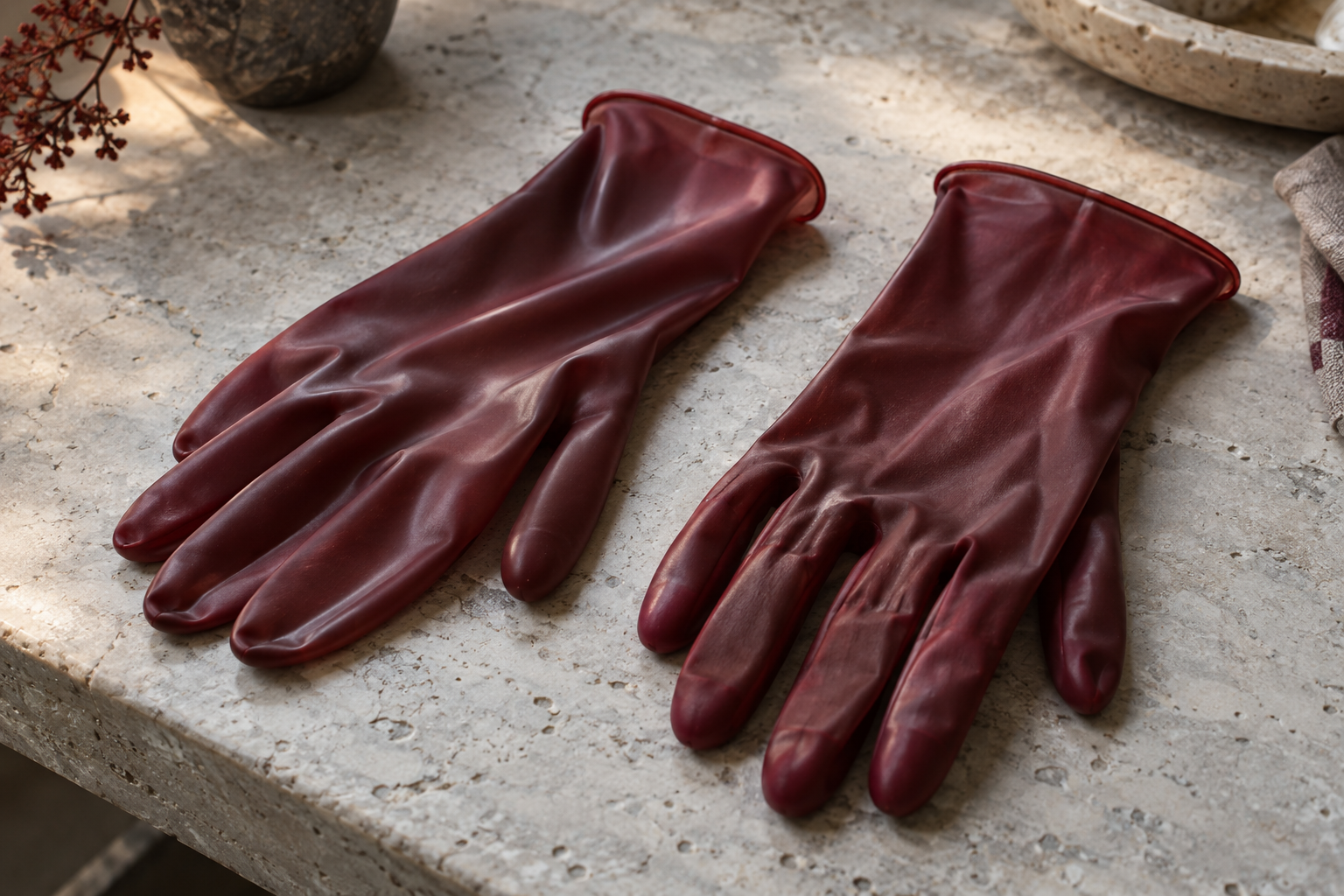
The choice between chlorinated and untreated latex is less about quality than preference. Both begin with the same expressive material. The surface treatment changes the ownership experience: how you dress, how it moves and how much tack you want to feel.
Regular latex
Untreated latex has pronounced grip and drag. Dressing often requires talc or a compatible lubricant, which turns preparation into a distinct ritual. Some wearers value the sensation and the very specific sound and movement that follow.
It may also demand more patience. The surfaces can cling together, and pulling against that resistance raises the chance of nail damage or stressed seams.
Chlorinated latex
A treated surface generally feels smoother and is easier to slide over skin. Garments separate readily in storage and may need less dressing aid. For frequent wear, travel or pieces with narrow limbs, that convenience can be decisive.
The feel is different rather than objectively improved. People who love strong surface grip may find it less characterful, while others finally wear pieces they previously avoided.
A practical comparison
- Dressing: usually quicker when chlorinated; more ritual with regular latex.
- Surface feel: silky and lower-friction versus grippy and tactile.
- Care: both need compatible cleaning, darkness, cool storage and protection from oils.
- Repair: ask a specialist whether treatment changes the preparation needed for future glue work.
- Cost: chlorination adds an upfront service cost but may reduce reliance on dressing products.
How to decide
If possible, handle samples or buy one small treated item. Your skin, wardrobe habits and preferred sensation will answer the question faster than a universal pros-and-cons list.