
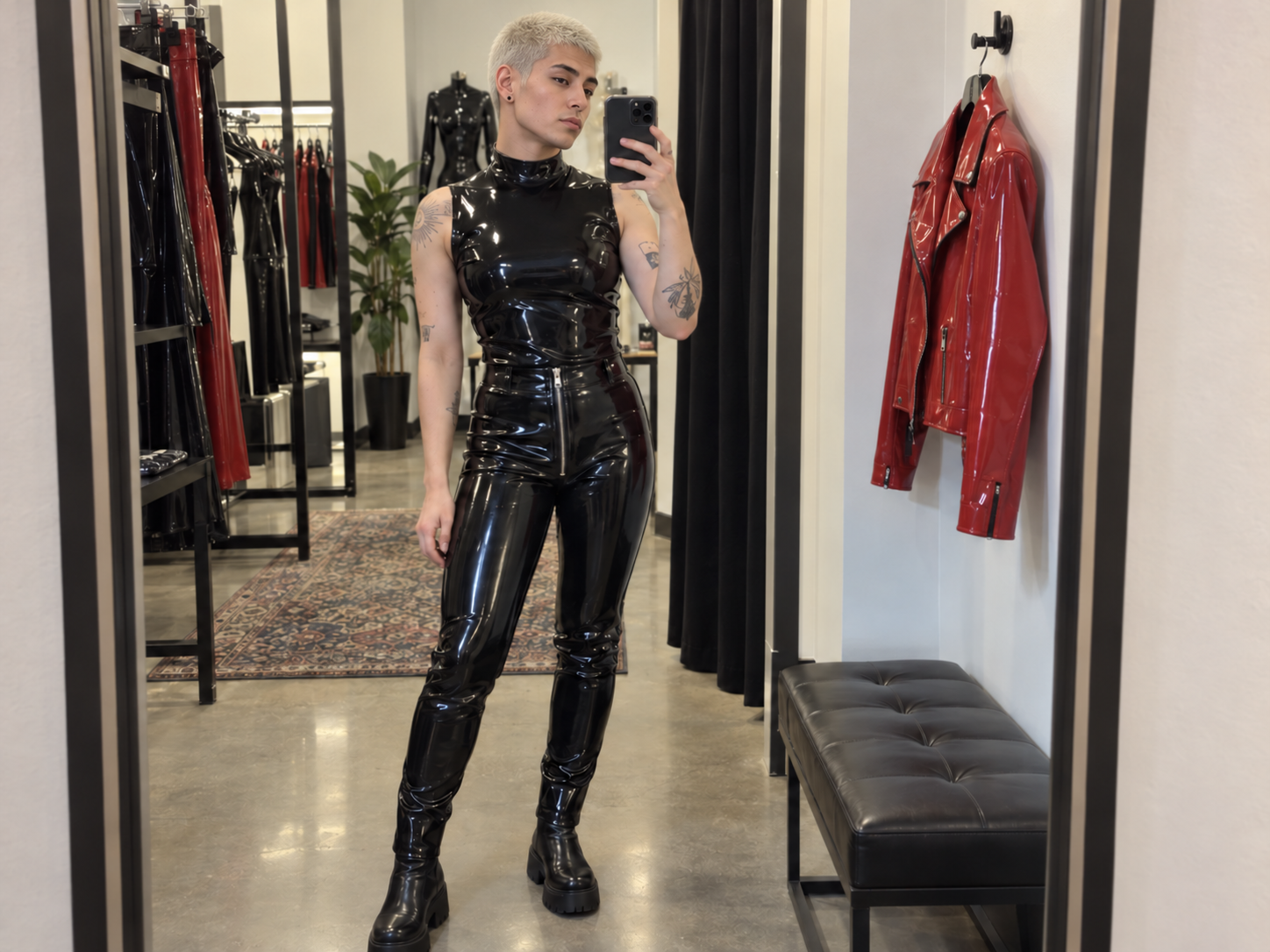
A practical guide to measurements, stretch, ready-to-wear sizing and comfortable first fittings.
Use the maker’s chart, not your usual size
Latex brands do not share one standard size system. A medium from one maker may differ from another, and your everyday clothing size is only a rough reference. Use the current chart for the exact garment and ask the maker how much ease or compression is built into the pattern.
Check whether the chart lists body measurements or finished garment measurements. Confusing the two can produce a dramatic sizing error. If a measurement falls between sizes, contact the maker rather than assuming that maximum stretch will solve the problem.
Measure your body accurately
Use a flexible tape over close-fitting underwear or bare skin. Keep it level and comfortably close without pulling it tight. For most garments you will need the fullest chest or bust, natural waist and fullest hip. Catsuits and fitted dresses may also require torso, inseam, thigh, upper arm, neck and height measurements.
Stand naturally and ask somebody you trust to help with difficult measurements. Measure twice and record the date. Bodies change, so an old order form is not necessarily accurate for a new purchase.
Understand what a good fit feels like
Latex is usually intended to sit closer than woven clothing, but close should not mean painful. A good fit follows the body without severe pulling at seams, deep ridges, numbness or restricted breathing. You should be able to move in the ways the garment requires, including sitting, lifting your arms and walking safely.
Wrinkles do not always mean the item is too large; body shape, pattern design and latex thickness all affect how it settles. Equally, a perfectly smooth photograph does not prove that a garment is comfortable. Fit should be assessed in motion, not only in a mirror.
Match the first garment to your confidence
A skirt, shorts, leggings, simple top or gloves are easier first fittings than a catsuit with several exact proportions. Separates let you learn how a maker sizes, how the material feels and how much dressing time you enjoy before making a larger investment.
Think about openings and fastenings. A back zip may require help, while a neck entry may demand more stretch and technique. Reinforced zips can make dressing easier but still need careful handling. Choose a design you can use comfortably, not only one that looks dramatic in a photograph.
Know when made-to-measure is worthwhile
Ready-to-wear works well when your measurements sit reasonably close to one size. Made-to-measure may be useful when your proportions cross several sizes, you need a longer or shorter torso, or a standard cut repeatedly causes strain. It can improve fit, but it does not replace clear communication with the maker.
Provide the measurements requested, describe previous fit problems and ask what alterations are included. Check the returns and remake policy before ordering; custom pieces are often not returnable unless faulty.
Try on safely and review the fit
Follow the manufacturer’s dressing instructions, remove sharp jewellery and use only a compatible dressing aid. Work slowly with open hands rather than pulling one edge or seam. For the first try-on, stay cool, allow plenty of time and have help nearby if the garment is difficult to remove.
Stop immediately if you experience pain, numbness, dizziness, breathing difficulty or signs of an allergic reaction. Photograph fit issues only if you are comfortable doing so, then ask the maker for advice before wearing or altering the garment further. Natural-rubber latex can cause serious allergy; anyone with a known or suspected allergy should avoid exposure and seek qualified medical advice.