
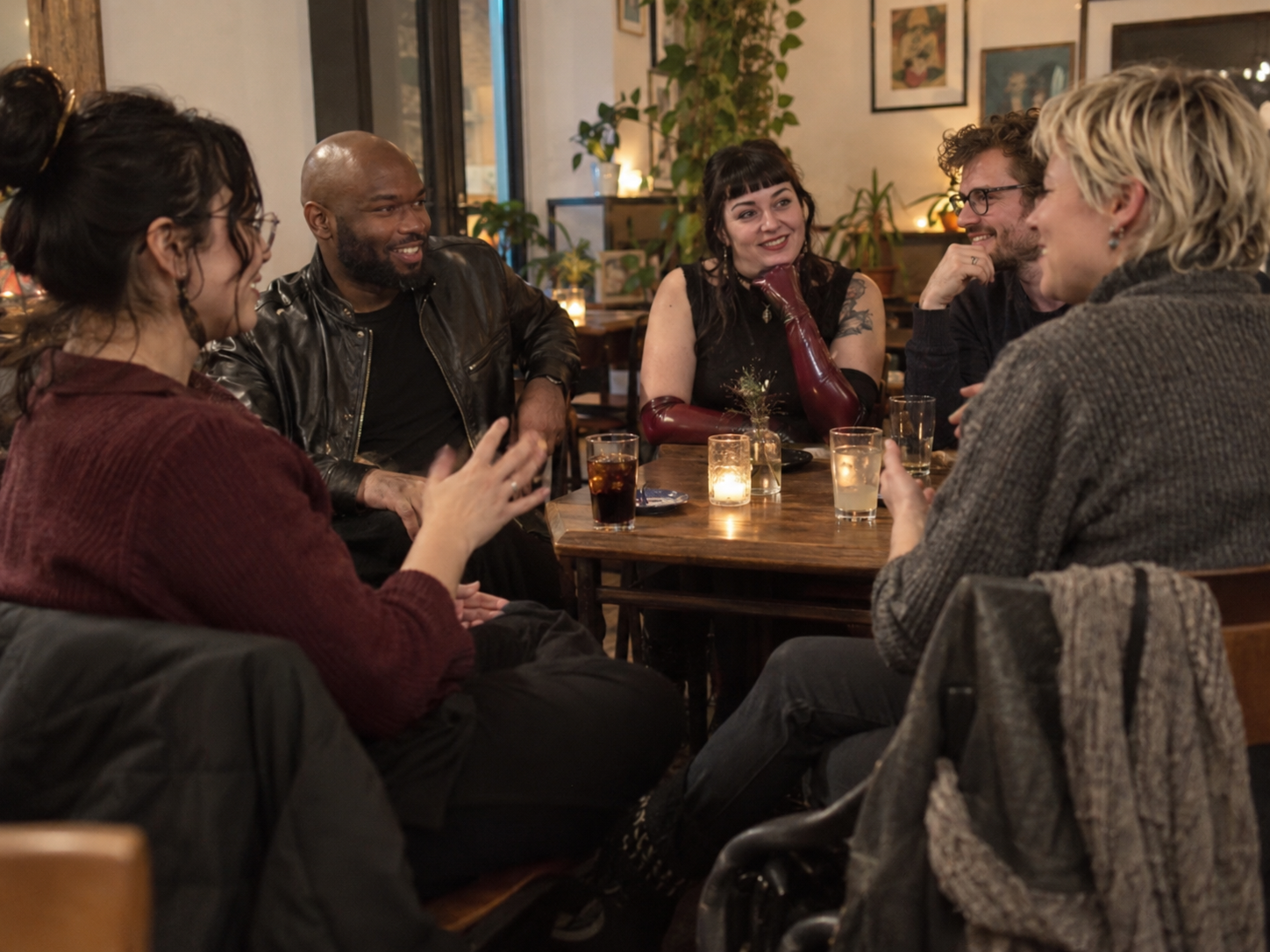
A low-pressure guide to finding welcoming spaces, starting conversations and building real friendships without treating every connection as a date.
Choose spaces made for conversation
Friendship is easier when the setting gives people time to talk. A local munch, maker market, workshop, discussion group or early-evening social will usually offer more natural conversation than a loud club. Read the event description and conduct policy first. Look for organisers who explain consent, photography, accessibility and how to contact staff.
Online groups can be useful too, especially if your local scene is small. Spend time reading the room before posting. Notice whether members answer newcomers kindly, whether moderators respond to boundary problems and whether the group allows social conversation rather than only personal adverts.
Introduce the whole person
You already have one possible subject in common, but friendship needs more than a shared material. Ask about music, design, photography, travel, food or the event itself. A simple observation—“The maker talk was useful; have you been to one before?”—is easier to answer than a comment about somebody’s body or private interests.
Offer a little information about yourself without unloading everything at once. Mention that you are new, what brought you along and what kind of community you hope to find. You do not need to prove experience or own an impressive wardrobe to belong.
Do not turn every contact into a date
In a dating-adjacent community, friendliness can be mistaken for romantic or sexual interest. Avoid that by taking words at face value. If somebody says they are looking for friends, respect the category. Do not use friendship as a waiting room for a later proposition.
If attraction does develop, ask once and make the existing friendship safe if the answer is no. “I enjoy talking with you and would be interested in a date, but I am also happy to keep this as friendship” is clear. Your behaviour afterwards matters more than the perfect wording.
Become a familiar, reliable presence
Most friendships grow through repeated ordinary contact. Return to the same social, join a group conversation, remember names and follow through when you say you will attend. Offer practical help only when it is wanted: sharing an organiser’s public link is useful; taking over somebody’s outfit, transport or safety plan is not.
Community contribution can make connection easier. You might support an independent maker, help with a permitted volunteer task or welcome another newcomer. Contribute without expecting attention or access in return.
Keep privacy and boundaries visible
Use the name and pronouns people give you, and do not reveal where you met them without permission. Never repost event photographs, tag accounts or connect private and professional identities unless everyone involved has agreed. What feels like harmless recognition to one person may create serious consequences for another.
Ask before touching a garment, taking a photograph or moving a conversation into explicit territory. Accept a no without requiring an explanation. Good community manners are not complicated: be discreet, be dependable and let closeness develop at the pace both people choose.
Let friendship look ordinary
A latex-community friend does not have to become an event partner or confidant about every private interest. Friendship may mean coffee after a market, sharing repair advice, visiting an exhibition or checking that each person arrived home safely. The ordinary parts are often what make a specialist community feel like home.
Give it time. One quiet event or awkward introduction does not mean the community is closed to you. Try a different format, speak to the organiser or bring a trusted friend next time. Belonging is usually built in small, repeated moments rather than discovered in one dramatic night.