
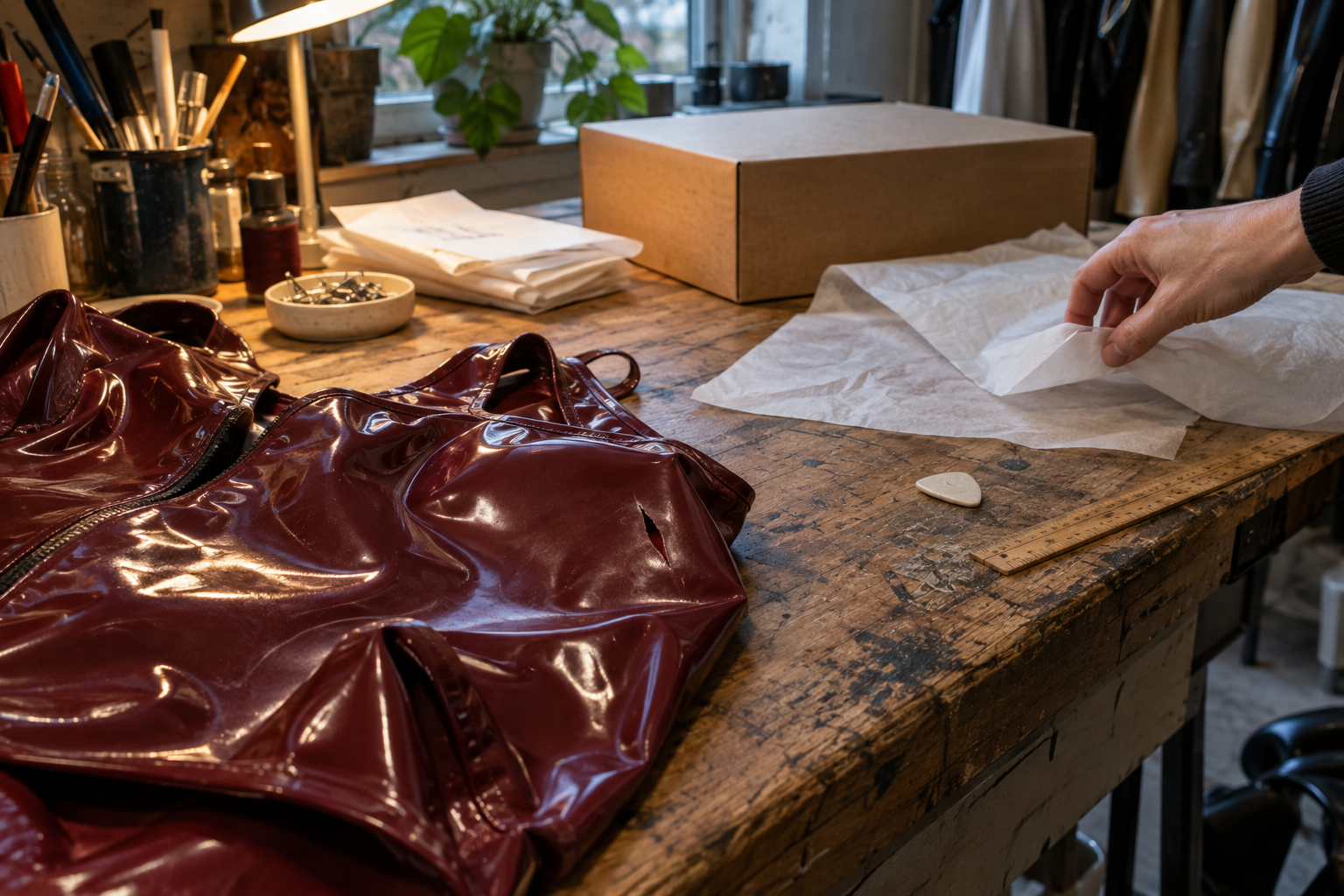
A successful repair begins before the garment reaches the workshop. Different specialists have different rules for chlorinated latex, powder and shipping, so contact the repairer first and treat their instructions as the final word.
Photograph before touching
Lay the garment flat in indirect light and photograph the whole item, then the damage from both sides with a ruler for scale. Note whether it is a clean tear, puncture, lifted seam, stretched area, failed zip or detached hardware. Explain how it happened if you know.
Do not keep trying the garment on. Tension can turn a small split into a long tear, and improvised tape or household glue may contaminate the surface a professional needs to bond.
Ask before cleaning or powdering
Send the photographs with the brand, age, latex thickness if known, colour, chlorination status and any previous repair. Ask whether the workshop accepts that brand and treatment, what preparation it requires, the likely cost and whether the work may remain visible.
Instructions differ. Some repairers request a completely clean, product-free surface; others want a light dusting of talc for transit. Follow the chosen specialist rather than combining advice from several websites.
Clean and dry exactly as requested
If instructed, wash gently with a latex-compatible cleaner to remove sweat, silicone, polish and dressing residue. Support the damaged area and do not scrub, wring or pull it. Rinse carefully and dry both sides completely away from heat and sunlight.
Do not apply fresh shine, dressing aid or unknown solvent. Residue can interfere with adhesive, while trapped moisture in a sealed package can mark the garment.
Pack for the damage you have
Place a written note inside the parcel identifying every fault. Fold loosely along existing lines and avoid putting a hard crease through the repair area. Protect sharp hardware so it cannot puncture another panel, then use the bag and outer packaging requested by the repairer.
Use tracked, appropriately insured shipping and keep copies of the photographs and quote. A repair may strengthen a local failure, but it cannot reverse rubber that has become broadly sticky, brittle or degraded. A reputable specialist will distinguish a repairable fault from material that has reached the end of its useful life.
Sources and further guidance
- Vex Clothing repair preparation: https://vexclothing.com/blogs/latex-fashion-news/how-to-prepare-latex-for-repair
- Rub Addiction repair preparation: https://www.rubaddiction.com/en/SERVICE/REPAIR/
- Always follow the instructions of the workshop actually accepting the garment.