
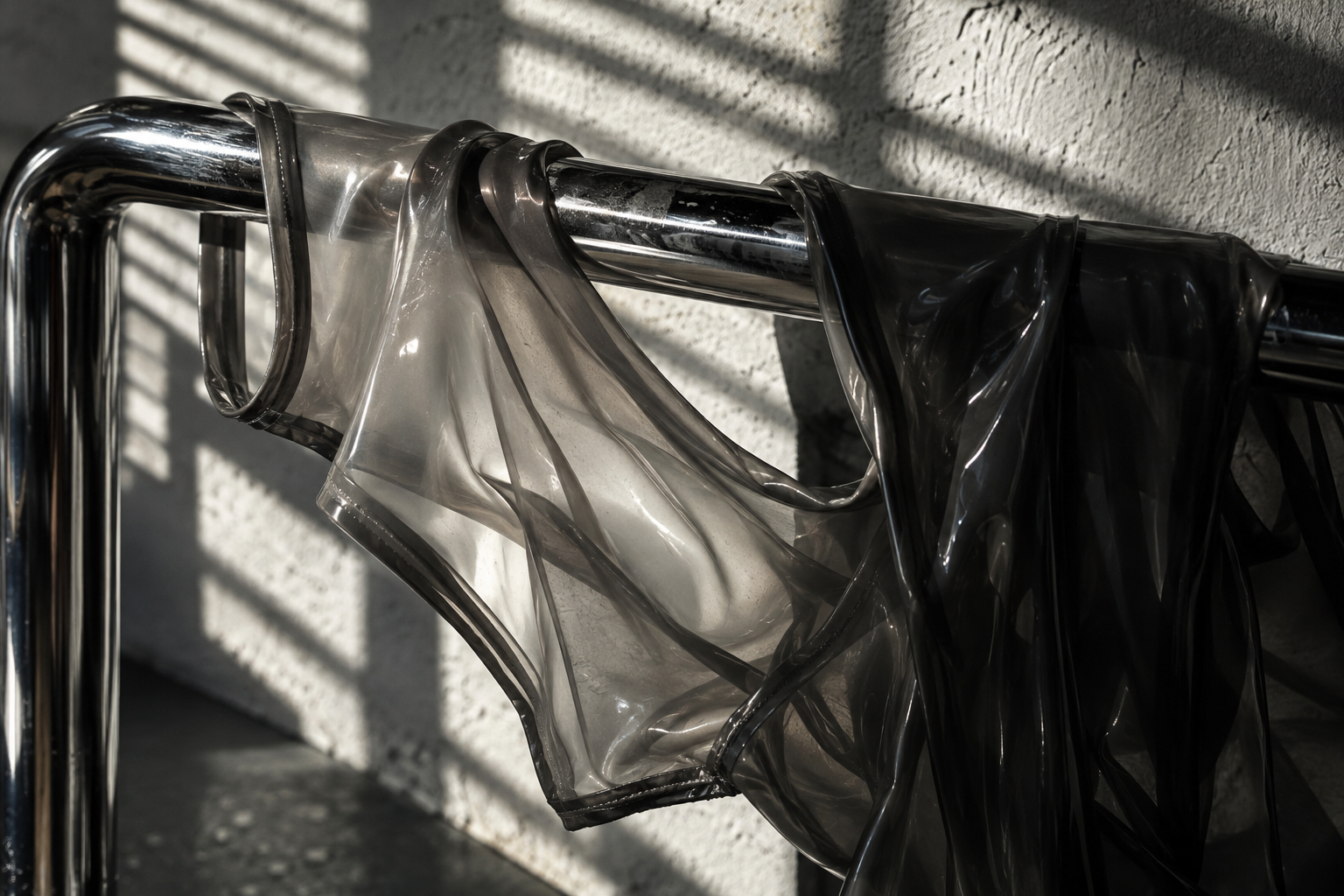
Chlorination is a surface treatment, not a new kind of latex. It changes how a garment feels in the hand and against the skin, which can make a favourite piece easier to live with. The best choice depends on what you enjoy about latex in the first place.
The short version
During professional chlorination, the latex surface is altered in a controlled process. The result is usually less tack, less friction and a smoother finish. Many wearers can dress without talc or large amounts of dressing aid, and garments are less inclined to cling to themselves in storage.
The treatment does not make latex indestructible. Heat, sunlight, oils, sharp edges and careless storage can still damage it. Think of chlorination as a change in handling and feel—not armour.
What it feels like
Untreated latex has the familiar grippy pull that many people consider part of the ritual. Chlorinated latex feels silkier and moves more readily over skin. That can be useful for fitted gloves, leggings and garments with narrow openings.
The visual difference is often subtle. Chlorinated pieces can still be polished, although the exact shine and feel vary with the sheet, colour, thickness and treatment. If the tactile drag is what you love, try a treated accessory before committing an entire wardrobe.
Before booking a treatment
- Ask whether trims, zips, glued seams and printed details are suitable for the provider’s process.
- Confirm whether the garment should arrive washed and free from polish.
- Use a specialist with experience in finished clothing, not an improvised home chlorine method.
- Discuss the finish you expect; “chlorinated” does not guarantee identical results across brands.
The LatexDates take
Choose the version that makes you want to wear the garment more often. Convenience is valuable, but so is the pleasure of a dressing ritual. There is no correct level of squeak, shine or resistance—only the experience that feels most like you.