
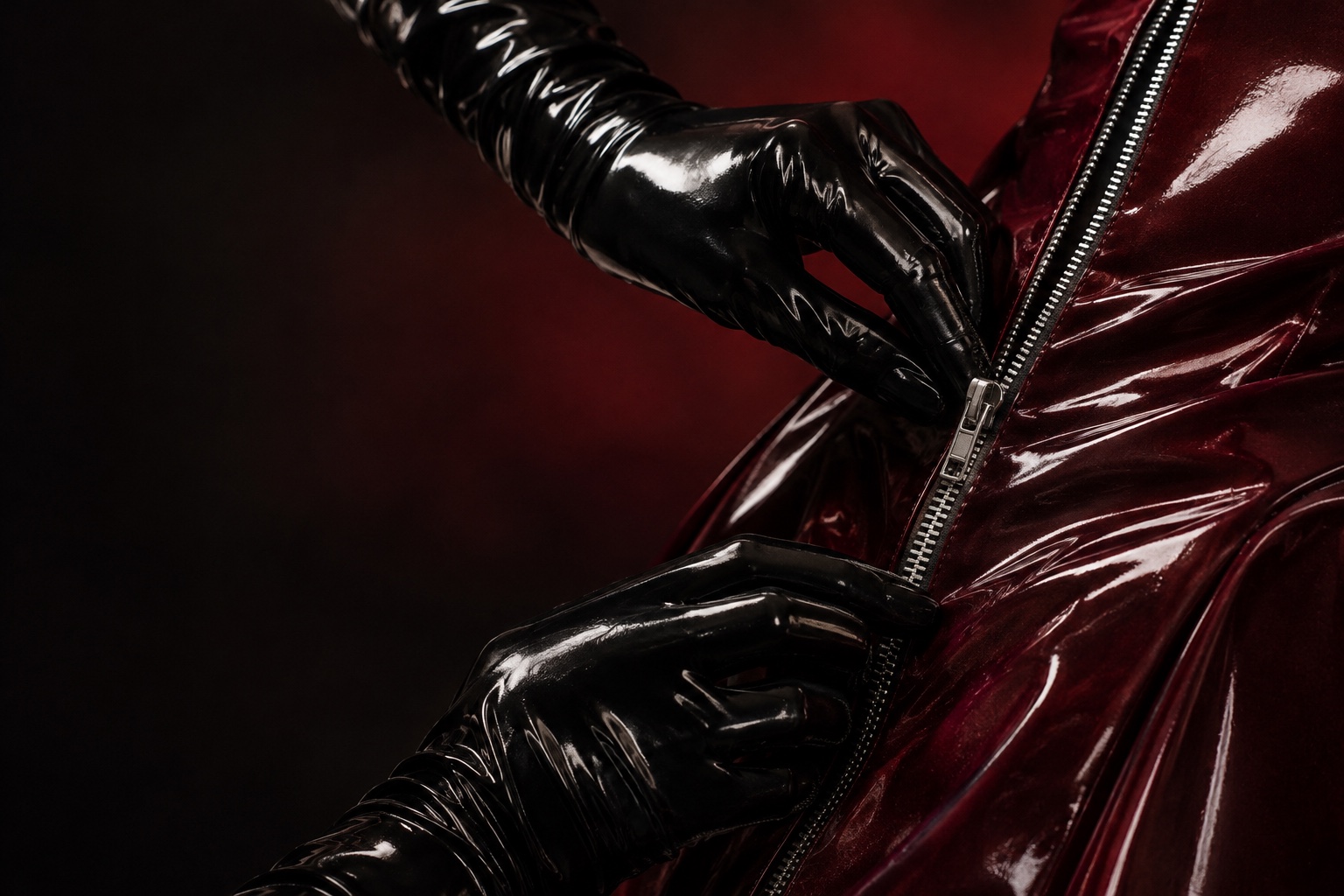
On latex, a zip is never just a fastening. Metal or moulded teeth interrupt a seamless reflective surface, drawing a deliberate line across the body. That contrast explains why zipped dresses, catsuits and jackets feel both practical and charged.
A line that directs the eye
A centred zip creates symmetry and length. A diagonal one adds motion. Zips at shoulders, hips or cuffs break a fitted silhouette into adjustable sections. Designers use that geometry much as a tailor uses lapels or seams: to decide where the eye travels first.
Hardware also gives glossy latex a point of contrast. Matte black tape can make colour appear brighter, while polished metal brings a sharper, industrial mood.
Control is part of the appeal
A two-way zip can alter the shape and ventilation of a garment without changing the entire outfit. That adjustability can help a wearer move between street styling, a club setting and a more intimate space on their own terms.
The important phrase is “on their own terms.” A zip is a design feature, not an invitation. Nobody else should open, tug or test it without clear permission.
Choose and use one well
- Look for a smooth backing or protective flap where teeth might catch skin or hair.
- Support the surrounding fabric while fastening; do not pull the slider against tension.
- Keep polish and dressing products away from the teeth unless the maker says they are compatible.
- Store the garment with the zip relaxed and follow the maker’s advice about whether it should be open or closed.
Style it with restraint
When the zip is already the focal point, the rest of the look can be simple: one strong colour, clean footwear and minimal jewellery. Let the construction speak.